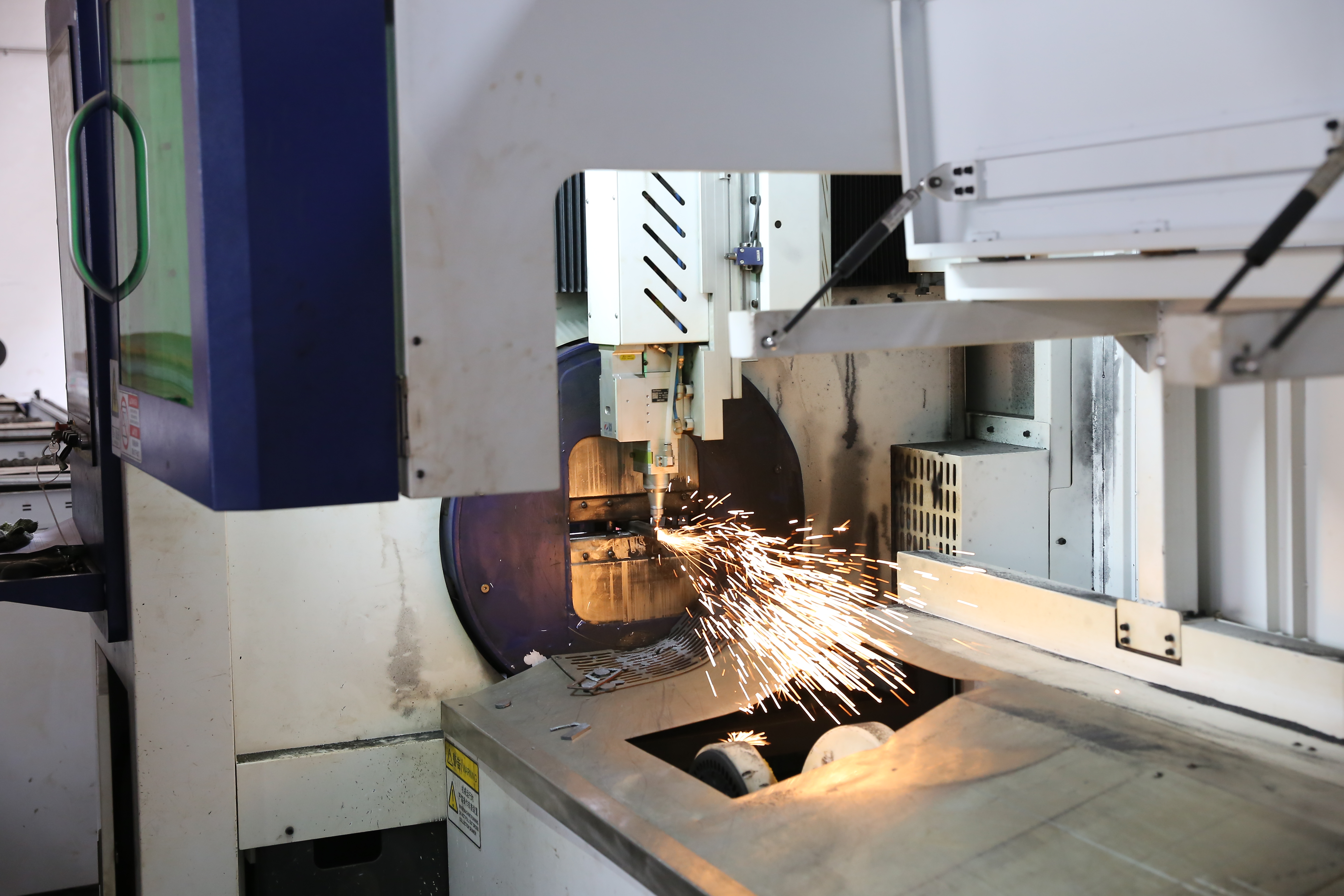
What is CNC Laser Cutting?
CNC laser cutting is a high-precision sheet metal cutting process that uses a focused, computer-controlled fiber laser beam to melt, burn or vaporize metal along a programmed path. Because the beam is directed by CNC programming and optics rather than physical tooling, it produces clean, burr-free edges with minimal heat-affected zone and no tool wear — making it ideal for complex geometries, intricate cutouts and short to medium production runs.
As a dedicated laser cutting sheet metal service provider, JinYang Manufacturing operates high-power fiber laser cutting machines capable of processing sheet thicknesses from 0.5mm to 20mm. Our fiber laser source delivers superior beam quality, energy efficiency and cutting speed compared with traditional CO2 systems, ensuring consistent accuracy across both thin foil gauge and thicker plate. Combined with intelligent nesting software, we maximize material utilization and reduce per-part cost for our customers.
Our CNC laser cutting service is a core capability within our precision sheet metal fabrication workflow. Cut blanks feed directly into downstream CNC bending, welding, surface treatment and assembly operations, allowing us to deliver fully finished custom metal parts from a single source. Whether you need a one-off prototype or a recurring production order, our engineering team reviews every drawing for manufacturability and provides a quotation within 24 hours.
Why Choose Fiber Laser Cutting?
- Exceptional precision: Dimensional tolerances of ±0.1mm as standard, with ±0.05mm available for critical features.
- Clean cut quality: Smooth, burr-free edges that often require no secondary deburring or finishing.
- Design freedom: Complex contours, fine cutouts and tight hole patterns that are difficult or impossible with punch press tooling.
- No hard tooling: Direct cutting from CAD files means no expensive dies and faster time to first part.
- Material efficiency: Smart nesting software minimizes scrap and lowers material cost per part.
- Low heat input: A narrow heat-affected zone preserves the mechanical properties and flatness of the surrounding material.