What is CNC Bending?
CNC bending — also known as press brake bending — is a sheet metal forming process that shapes flat cut blanks into three-dimensional parts by pressing them between a punch and die along a programmed bend line. Computer numerical control governs the back gauge position, ram depth and applied tonnage, ensuring every bend angle and bend location is repeated accurately across an entire production run. The result is consistent, dimensionally stable formed parts suitable for downstream welding, assembly and surface finishing.
As a core capability within our CNC sheet metal fabrication offering, JinYang Manufacturing operates CNC press brakes with up to 3000mm bending length and multi-axis back gauges. This equipment allows us to form complex multi-bend geometries — including enclosures, channels, brackets and panels — with an angle tolerance of ±0.5° and minimal springback. Our operators select punch and die tooling, bend allowance and sequence based on the specific material grade, thickness and geometry of each part.
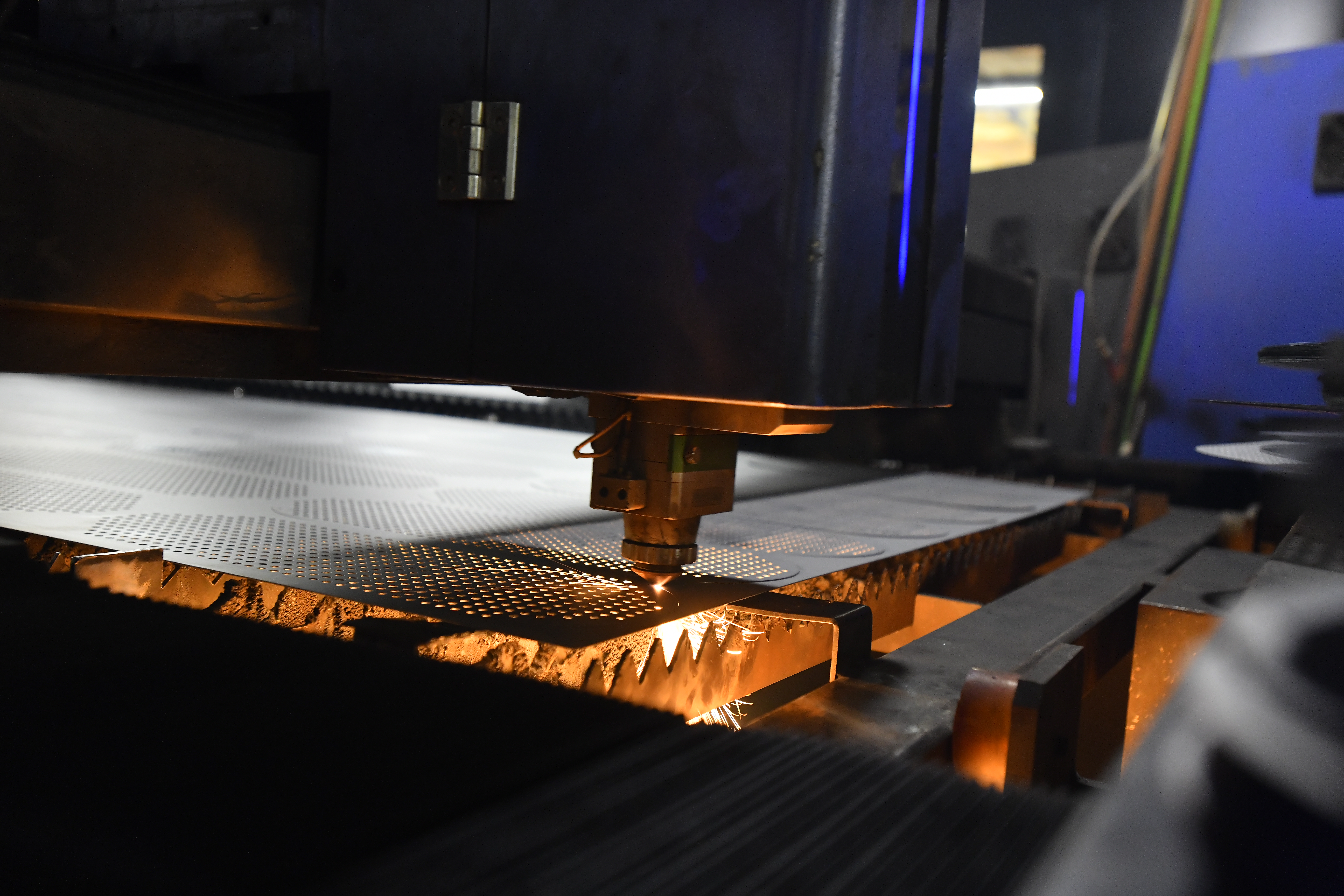
Because bending follows laser cutting in our precision sheet metal fabrication workflow, we control both upstream blank preparation and downstream forming under one roof. This integrated approach eliminates tolerance stack-up between suppliers, shortens lead times and gives our engineering team full visibility over part manufacturability. Whether your project calls for a one-off prototype or a recurring production order, we review every drawing for bend feasibility and provide a quotation within 24 hours.
Advantages of CNC Press Brake Bending
- Consistent accuracy: CNC-controlled ram depth and back gauging hold angle tolerances of ±0.5° across long production runs.
- Complex geometries: Multi-axis back gauges enable precise positioning of successive bends for boxes, channels and intricate brackets.
- Material versatility: Suitable for stainless steel, carbon steel, aluminum and galvanized steel from 0.5mm to 6mm thick.
- Cost-effective forming: Standard tooling handles most profiles without the cost and lead time of custom dies.
- Repeatable quality: Programmed bend sequences are stored and recalled, guaranteeing identical results on repeat orders.
- Seamless integration: Cut blanks feed directly into bending and on to welding, finishing and assembly for a streamlined process.